

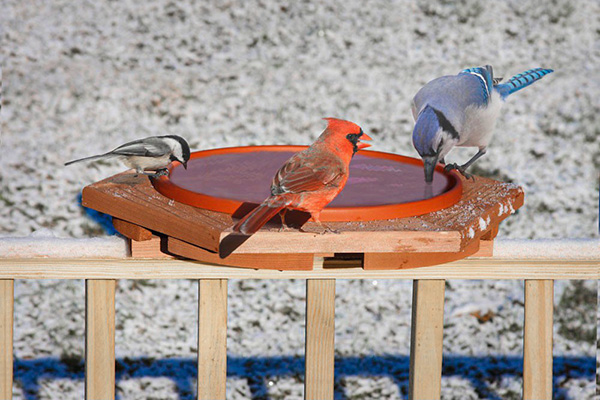
Birds have a few tricks they use to deal with the cold. The most obvious is simple, birds have feathers. Feathers trap air pockets, which serve as insulation. They will also roost together, huddling tightly, to create extra body heat. Even with these tricks, wild birds struggle to survive freezing weather, and they need your help. You can take some steps to ensure your backyard is welcoming to birds on even the coldest days:
 Food and Feeder
 Food and Feeder
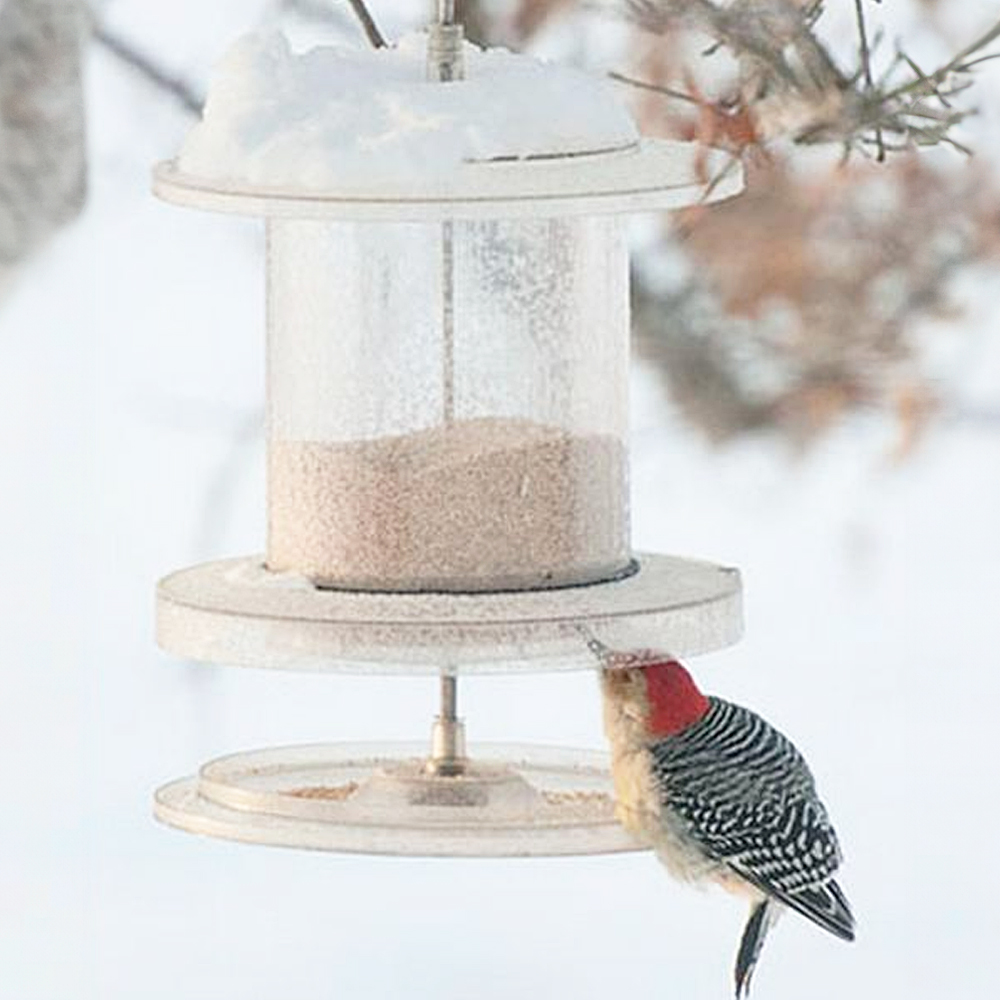
Natural food is scarce in the winter. Keep your feeders clean and full of fresh, high-energy seeds like black oil sunflowers, sunflower kernels, and peanuts. Birds need to burn more calories in the winter just to stay warm. Suet, especially ones with peanuts (SESC108) is another great option to consider helping provide the calories birds need when temperatures drop. High-fat foods mimic the insects and grubs birds would normally eat. During winter, when bugs are scarce, your protein offerings become critical.
Offer your food in a feeder that is winter ready with a top that overhangs like Songbird Essentials All Weather Feeders (SEAWFFF734 & SEAWFFF736). If yours does not, you may purchase a separate baffle that hooks onto the hanger of your current feeder and offers protection and keeps the food and birds dry.
Shelter
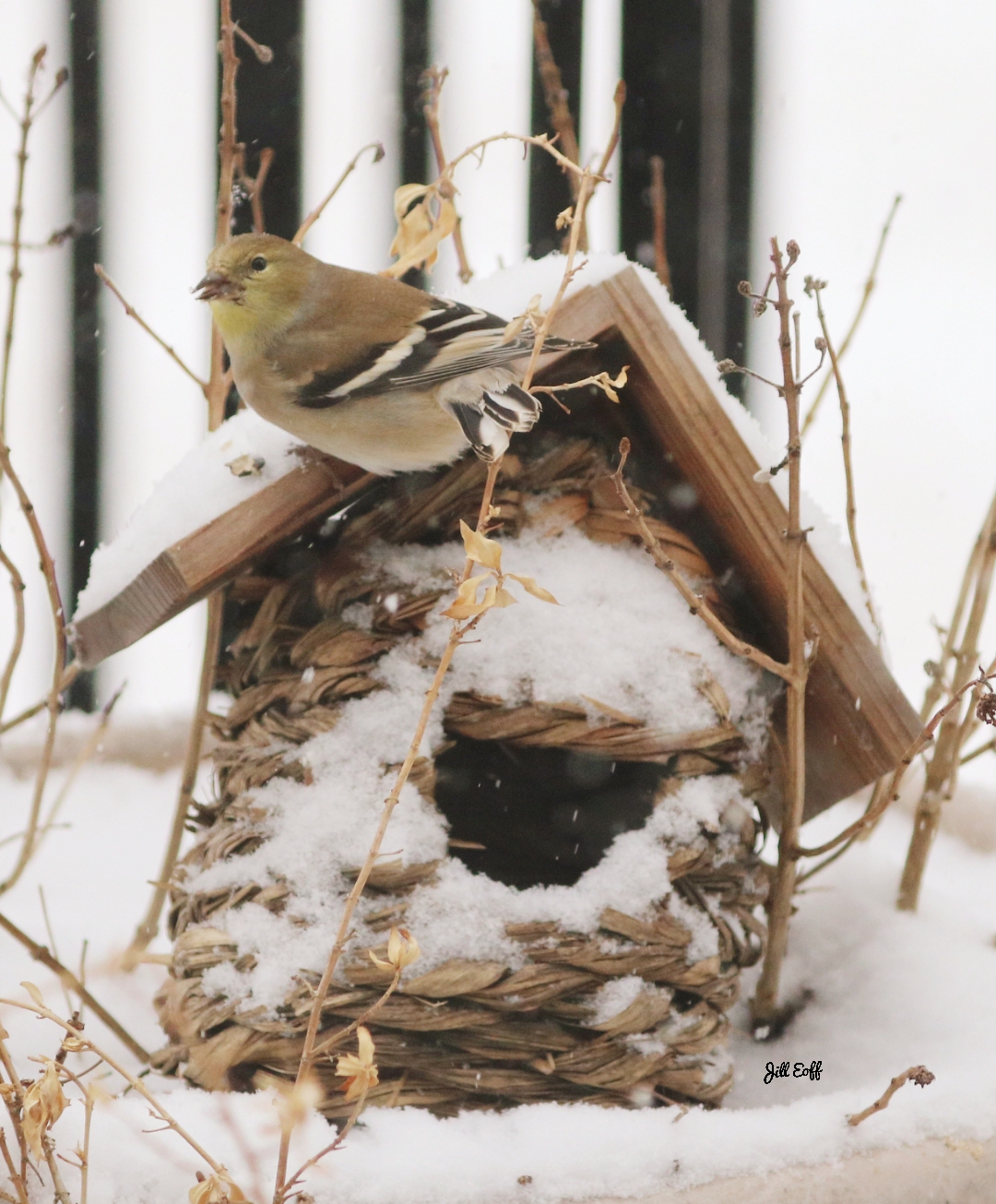
The only reprieve birds have from the cold is when they can find a crevice or hole where they can hunker down. Providing shelter for birds in harsh weather is extremely important. Fallen branches, dead gardens, and piles of shrubs can be a winter paradise for birds. Alternative to these materials is a roosting pocket (SE939). Roosting pockets provide refuge from harsh storms, wind, freezing rain, heavy snow, and the bitter cold. Made of natural materials that that blend in with surrounding trees and brush, these pockets help keep birds safe from predators.
Another option is to consider hanging a roosting box (SE600); a wooden box with an entrance hole placed low to trap heat near the top. Roosting boxes contain perches inside, allowing birds to pack themselves into these boxes and huddle together to stay warm. Natural materials like cedar wood are ideal due to their insulation properties and resilience against moisture. Ventilation is another key feature; it prevents condensation build-up, ensuring the shelter remains dry and comfortable. Entryways should be the correct size to deter predators while allowing easy access for the birds.
Keep Your Birdbath Clean
Just like your bird feeders, keep your birdbaths clean to prevent disease from spreading among wild birds. Help keep your bird baths clean by scrubbing with nine parts water, one part vinegar, then rinse clean. Scrubbing it clean with a heavy duty like Songbird Essentials Bird Bath Brush (SE601), to remove any bird droppings, algae, dirt, or other debris from the basin. Take care to clean all areas of the basin, including the rim and exterior. Once the basin is clean, rinse it thoroughly using clean water. You want to remove any remaining debris and as much of the vinegar residue as possible. The bird bath should also dry fully before it is refilled with water. This will help ensure that the vinegar evaporates to provide a clean space for birds to bathe and drink. Changing the water regularly helps keep the bird bath clean. Filling bird baths with warm (not hot), keep an eye on it throughout the day and change when needed. If water freezes dump out ice and refill.
Choose a Winter Bird Bath Wisely
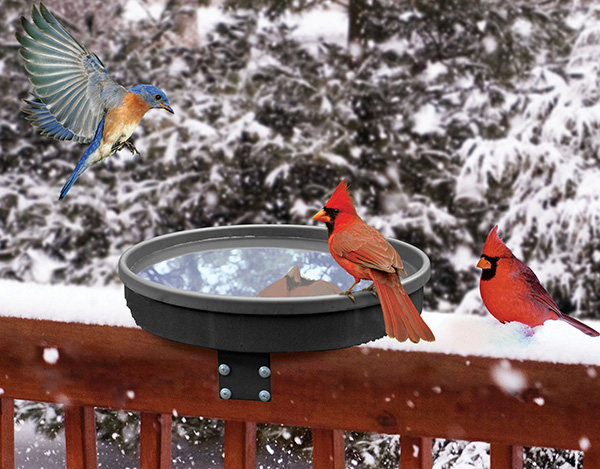
Birds prefer baths that are shallow, with the deepest part of the bath no more than one to 1.5 inches deep. If it is too deep, you can add a layer of rocks to the bottom so birds can use it more easily. Another option is to a raft like Songbird Essential bird raft (SE6017) that will float across the top making a deep bird bath shallow providing just the right amount of water for birds to use
Avoid concrete, stone, or glass bird baths in the winter, as they can crack if the water freezes. A heated birdbath like Songbird Essentials Songbird Spa (SE995) is best in coldest climates and will ensure the water does not freeze. If you already have a bird bath you could use a heater/deicer, like Songbird Essentials deicer (SE994). Some heaters use thermostatic controls, so they turn on only when the temperature drops below freezing.
Keep The Water Moving
A water wiggler or agitator (BE307) is a simple device that creates continuous ripples and movement throughout your bird bath water. By doing this it helps prevent the water from freezing and keeps it accessible. The continuous movement of the water will also help prevent mosquitoes from laying their eggs in the birdbath in warmer months.