
If you aren’t able to attend all of the sessions in the Songbird Station Spring Seminar Series this year-no worries! You can find the videos here!
Nest Box Seminar -March 14th
Attracting Hummingbirds, Orioles, & More! April 11th
If you aren’t able to attend all of the sessions in the Songbird Station Spring Seminar Series this year-no worries! You can find the videos here!
Nest Box Seminar -March 14th
Attracting Hummingbirds, Orioles, & More! April 11th
View the interactive map below to see reported sightings of Hummingbirds along their spring migration path. You can see sightings of a variety of other migrants and report your own sightings by visiting the Journey North site at: https://journeynorth.org/.
Also visit BirdCast website at: https://birdcast.info/migration-tools/live-migration-maps/ for real-time up to date migration traffic by Cornell Lab.
Hummingbirds have been sighted in our area! Now is the time to make sure your feeders are up and ready to receive incoming migrants.
Early arrivals are counting on you to help replenish their energy after their long journey until nectar-rich flowers bloom in May. In return, they bless us with their unique behavior and positive energy. For more information on Hummingbirds & to see where they are migrating in real-time CLICK HERE!
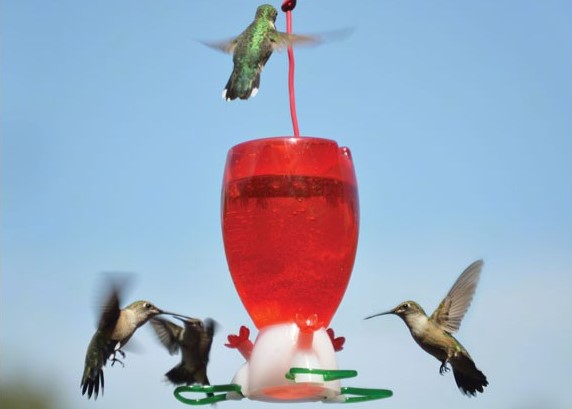
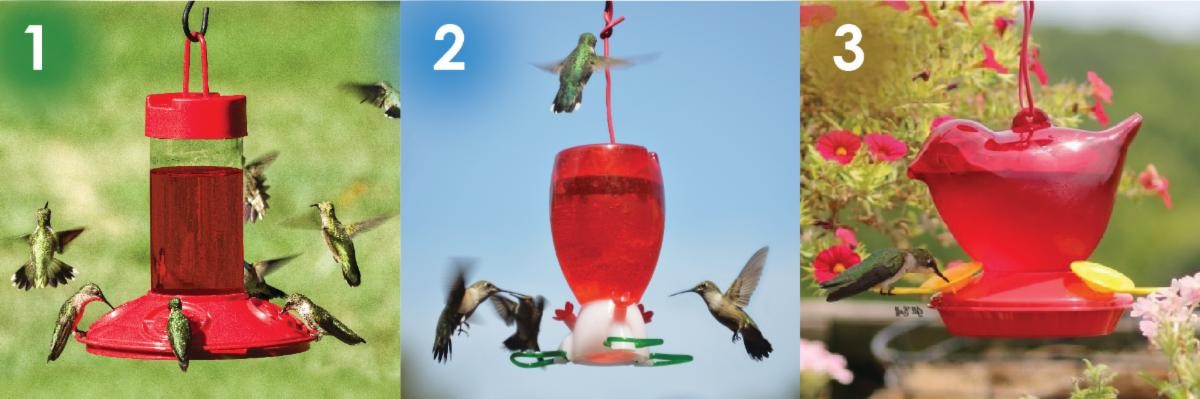
Now let’s explore how to attract Hummingbirds to your yard. Consider adding multiple bright red feeders to your yard, like our Dr. JB 10 oz. Clean Feeder (Image 1). Its designed to be drip-free, bee resistant, and easy to clean. A great starter feeder is The Big Red Hummingbird Feeder Kit (Image 2). It comes complete with sugar, just simply add water! The Red Bird Hummingbird Feeder (Image 3) has a fun design and holds 12 ounces of nectar! Stop in and we can help you select the right feeder and the best location for placement.

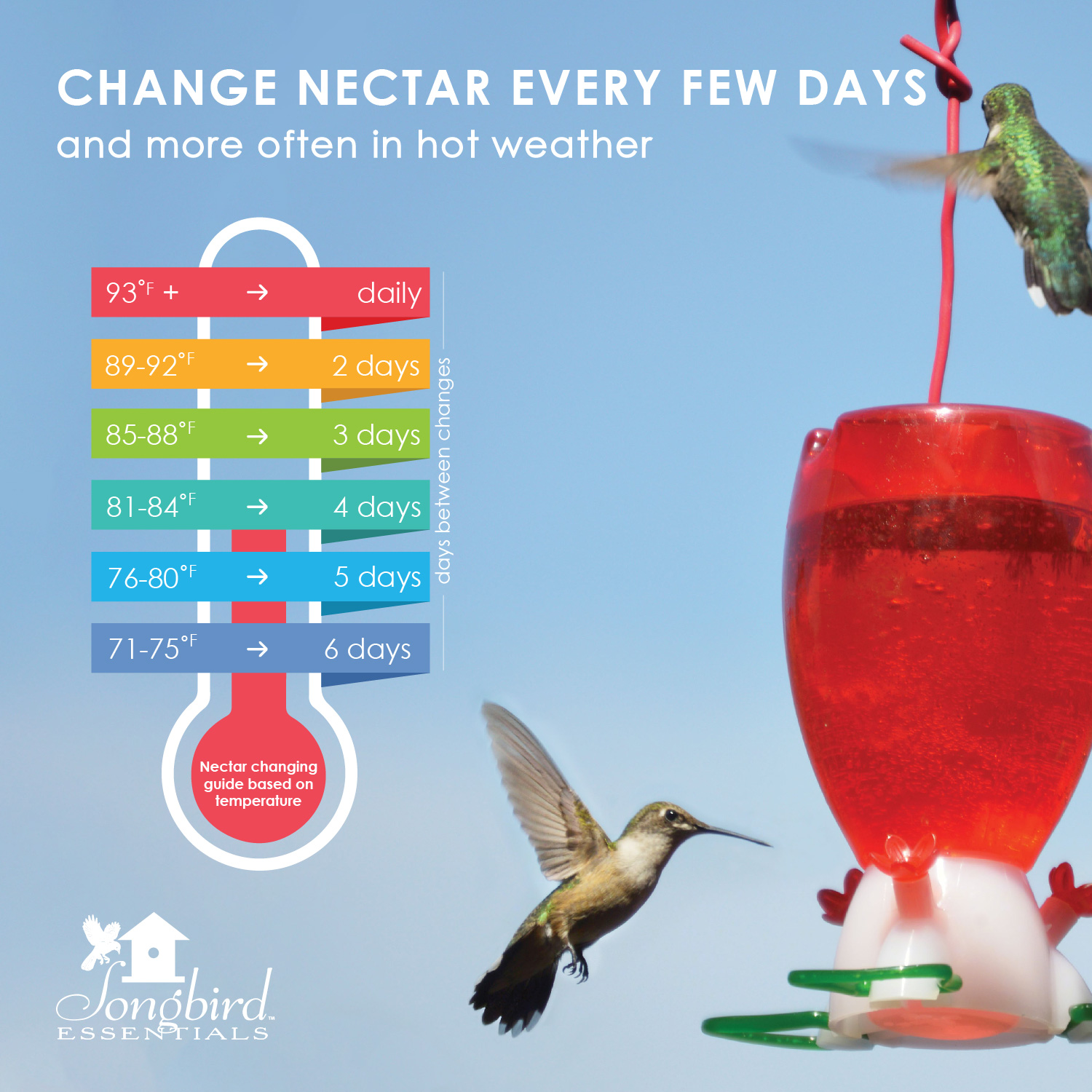
Be sure to keep nectar fresh! Hummingbirds that encounter spoiled nectar will avoid the offending feeder for some time. Use our handy guide to help you determine how often to change nectar based on the temperature.

Bird Man Mel had a flurry of hummingbird activity in his backyard last week and captured some fantastic images. Check out his tips and tools that will bring Hummingbirds to your yard as they head south for the winter!
Feeder Fresh Nectar Defender is an all-natural product that protects the freshness of hummingbird nectar and stops spoilage. It is bird-safe and works using a micronutrient naturally consumed by hummingbirds in their diet of nectar and insects. Feeder Fresh ND will protect your nectar for weeks, and hummingbirds will enjoy fresh nectar every time they visit your feeder. Simply add a small amount to your current nectar. One bottle lasts an entire season. It contains no artificial preservatives or dyes. Once you try Feeder Fresh ND, you will never want to feed hummingbirds without it. Patent pending.


Items Needed:
Glue Sticks
Parchment Paper
Markers/Water Color Paint
Scissors
Instructions:
Click to View Hummingbird TIPs
In the United States, you can find over 16 kinds of Hummingbirds. For people east of the Rockies, the most prevalent by far is the Ruby-Throated Hummingbird. In fact, the Ruby-Throated Hummingbird is the most widely distributed of the world’s 338 species of Hummingbirds, all of which occur ONLY in the Western Hemisphere.
The Ruby-Throated Hummingbird is often found between woodland and meadow; however, it has adapted well to human development, but only if there is shelter, space, and food. It is frequently seen in suburban backyards with mature trees and shrubs, in wooded parks, and around farmsteads.
The Keys to Attracting Hummingbirds are to provide Food, Help for Nesting, and Misters (Water) for them to fly through. Providing natural plants that bloom from Spring through Fall is one of the best ways to attract hummers to your yard! Read on and learn how to make your yard a “Hummingbird Haven©.”