Missouri’s brightly colored summer residents, the Baltimore Oriole and Orchard Oriole, have quickly become two of our favorite birds. With their striking black and orange or yellow plumage and their rich musical songs, these birds delight us when they’re in our area from spring to late fall.
They’re rather shy, solitary birds, so it may be difficult at first to attract Orioles to your yard. Don’t place feeders real close to busy human activity or other feeding areas.
Keep reading for more tips on what they need as far as food, water and shelter.
Quality Food:
Orioles prefer nectar, fruit and jelly, so feeding them is a little less messy than some other birds — no scattered seedl They also eat many insects, which provides natural and effective pest control in yards and gardens.
It’s important to get Oriole food and feeders ready early in the migrating season (late March or early April), since they migrate at night — they’re worn out from their travels when they approach your yard, and you don’t want them to pass you by!
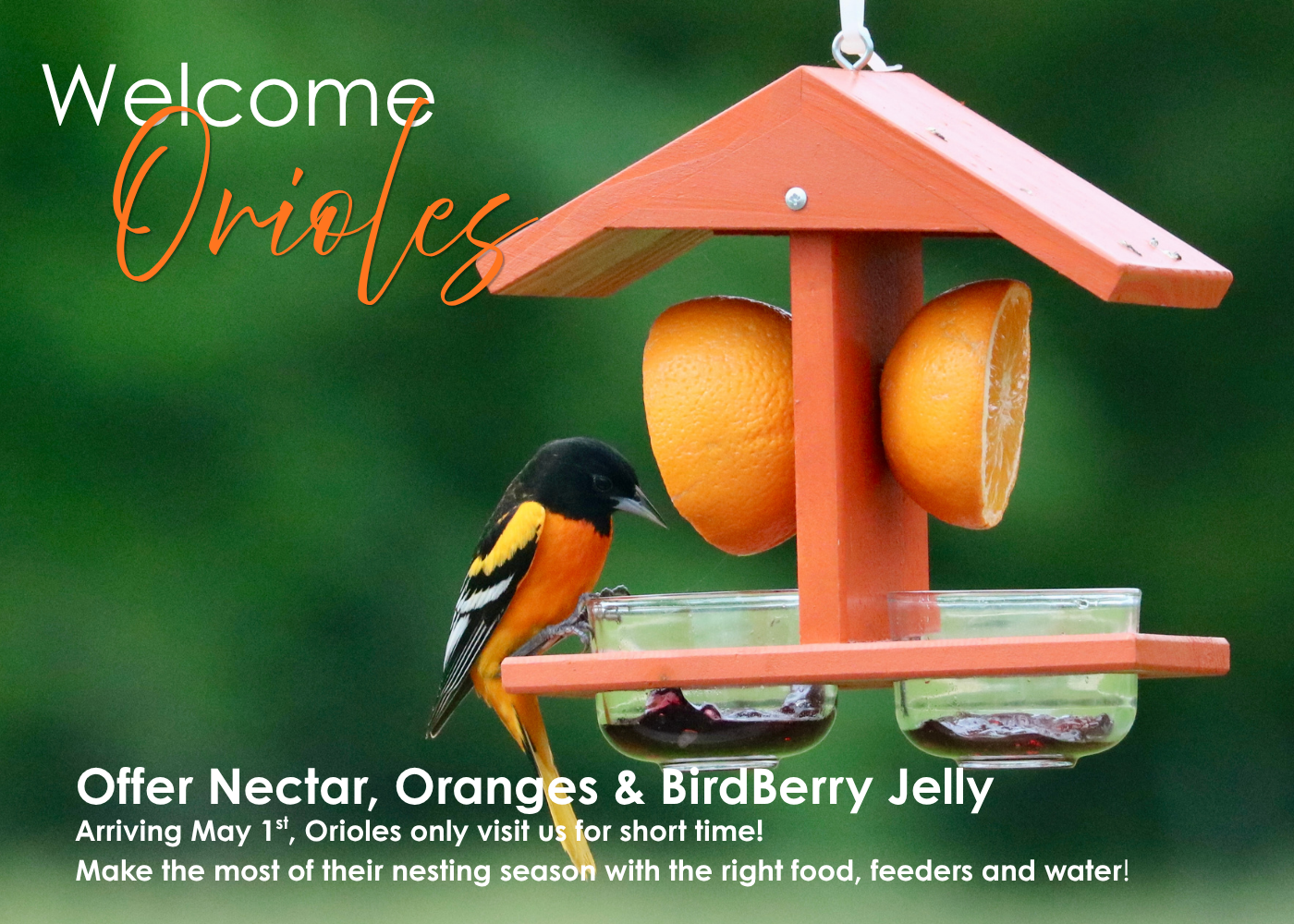
Oranges are one of the keys to attracting Orioles: Cut them in half and offer them “juicy side out”. They also like grape jelly and specialized nectar.
You can offer Oriole nectar, jelly and other fruit on special feeders by your home and patio. A great feeder to try is the Songbird Essentials Jelly Feeder, which slips right on to store-bought jars of jelly or jam. Very easy to use and cleanl There’s even a special combination of all-natural grape and blackberry jam that we cleverly named “BirdJam” — yes, Woodpeckers, Robins, Warblers and other birds like jellies and jams too.
ff you’d prefer to use nectar, a specialized Oriole nectar works better than the sugar/water mixture that is often offered to Hummingbirds.
There are some Oriole Feeders that are specially designed to allow you to offer fruit, nectar or jelly — stop in to Songbird Station and we can show you how they work!
Clean, Fresh Water:
Orioles are especially attracted to shallow bird baths and moving water, so adding something like a bubbler or dripper will product the sparkles and splashes to attract them. Adding orange decorations to your bird bath can help too. (In fact, orange flowers and garden accents such as gazing balls or garden flags can also get Orioles’ attention and encourage a visit.
Safe, Secure Shelter:
Orioles prefer protected spaces like leafy deciduous trees and dense shrubs, especially if they’re placed in clumps or thickets.
They don’t use bird houses as such; rather they build an amazing pendulous nest if you have the nesting materials they prefer. Willow, elm, oak, popular and cottonwood trees offer suitable material. You can encourage them by offering long strips of twine or horse hair.
Tips Brochure:
Oriole TIPs Trifold