Attracting Birds, Bird Baths, Bird Food and Feeders, Informative  |  October 15, 2019

Family Time

By: Kevin Alferman

Warblers

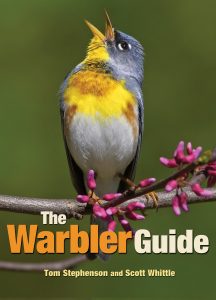
The Warbler Guide By: Tom Stephenson & Scott Whittle

Welcome to the wonderful world of Warblers. Did you know that 37 species of warblers migrate through Missouri in the Spring and Fall? Fall viewing can produce some rewarding looks at the colorful and artistic patterns of warblers, however, they don’t come easy. Most warblers are secretive, hiding among the foliage. They feed actively, primarily on insects, so it seems like right when you’re ready to get a good look, it moves. But keep trying, because when you do get a good look it’s really worth it. In general, warblers are tiny (smaller than sparrows, slightly larger than a goldfinch) and their beaks are short and pointed. Common species that breed in Missouri include Northern Parula, American Redstart, Prothonotary Warbler, Ovenbird, Louisiana Waterthrush, Kentucky Warbler, Common Yellow Throat, and Yellow-Breasted Chat. Uncommon breeding warblers include Blue-Winged, Yellow-Throated, Yellow, Pine, Black and White, Prairie, Cerulean and Worm-eating. Common migrating warblers include Tennessee, Yellow-Rumped, Black-Throated Green, Blackpoll, Palm and Wilson’s. Uncommon migrating warblers include Orange-Crowned, Nashville, Chestnut-sided, Magnolia, Blackburnian, Bay-Breasted, Mourning, and Canada. WHEW! As if that’s not enough, an additional 6 species wing through as rarities. Want to learn more – Check out “The Warbler Guide”.

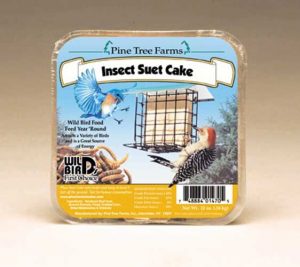
Pine Tree Farms Insect Suet Cake

Species Spotlight – Yellow-Rumped Warbler

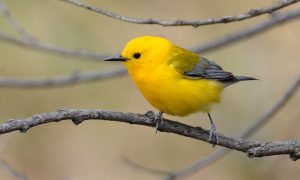
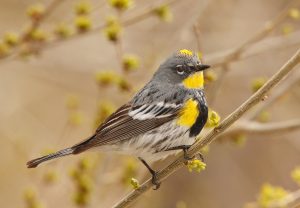
The Yellow-Rumped Warbler is one of the most abundant warbler species throughout the country. In Missouri, they are abundant migrants from Early October through November, with their numbers reducing through December. A few even stick around through the winter! They spend the summer breeding in Canada and high mountains. Look for them in the higher portions of trees in your yard. Locate them by listening for their often repeated short call (sounds like “check”). It is a well-named species because the yellow rump is a good field mark. It looks like a pat of butter was placed above the base of the tail, giving them the illustrious nickname “butterbutts”. Also, look for the white spots on the black tail (especially visible in flight) and the yellow patches on the flanks. Color patterns and markings are bolder on the male. The male’s body has an overall bluish-gray look, while the female appears more brownish. This species is separated into two subspecies and both migrate through Missouri. The Audubon race is the western variety and has a yellow throat. The white-throated Myrtle race breeds mostly in the eastern U.S. and Canada.

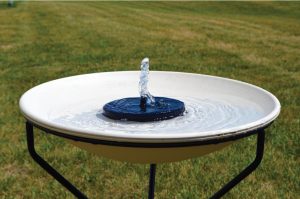
Backyard Essentials Floating Solar Birdbath Bubbler

Attracting and Viewing Warblers

Warbler migration peaks in mid-September so now is the time to get ready for them. Birdbaths, especially with moving and noisy water, are a great way to get warblers in the open for a nice look. Ground and elevated birdbaths also work well. The simplest way to things moving is the Solar Powered Birdbath Bubbler (pictured) that can be easily inserted in any type of birdbath. Despite being insect eaters, there are some good food options for attracting Warblers. Many species make occasional visits to suet for the high energy beef fat, especially varieties that include insects, and fruit. HAPPY HUNTING!

Informative  |  October 11, 2019

Kids Corner September 2019

Fun Facts About Bats:
• Did you know bats have a thumb and four fingers just like you?
• Bats are mammals! They are the only mammals that can fly (without an airplane)!
• There are over 1,000 species of bats and they can be found in forests, deserts, jungles, and cities!
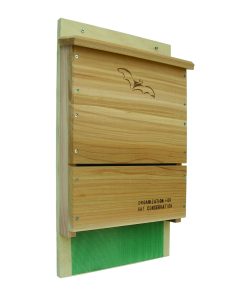
• Bats are nocturnal which means they feed at night and sleep during the day in caves, treetops, or the bat house in your backyard.
• Did you know that baby bats are called “pups”?
•Bats only have one baby at a time. On occasion, a bat may have twins.
•Bats have the best hearing of all land mammals.

Attracting Birds, Nesting, Informative  |  March 12, 2019

Attract Nesting Birds to Your Yard

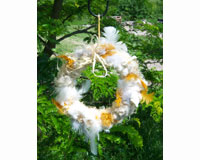
nesting material wreath

Many North American birds nest in “cavities” (holes in trees and fence posts). Although some birds, such as woodpeckers, can chisel their own holes with their heavy, sharp bills, other cavity-nesters must find suitable holes for nesting.

Unfortunately, suitable nest cavities can be hard to find in much of North America.

One way to solve the nest-site shortage is to provide artificial cavities, also known as birdhouses or nest boxes.

More than 50 species of birds (including Bluebirds, Kestrels, Owls, Titmice, Chickadees, Nuthatches, Wrens, Tree Swallows, and Woodpeckers) will use nest boxes.

Nest Boxes have helped boost populations of many cavity-nesting bird species whose numbers were declining. For example, both Wood Ducks and Eastern Bluebirds recently have made dramatic comebacks.

A Nest Box on your property will provide a valuable home for birds and enjoyable bird watching for you. We will help you figure out which birds you can attract to your yard and what’s the best way and place to mount your nesting boxes.

By attracting Nesting birds, you’ll enjoy the sight of parents and young in your yard.

TIP: if you DO add a nest box or two to your yard, offer your feathered friends some nesting material!

We have the only nesting material available that contains a mixture of five natural-colored materials preferred by North American Nesting Birds! Feathers, String, Cotton, Hemp, and Aspen fiber all included.

Because it contains all of the above, Nesting Material attracts many more birds than cotton only mixtures. Birds and consumers love it!

Click here for full brochure – Nesting Birds TIPs